
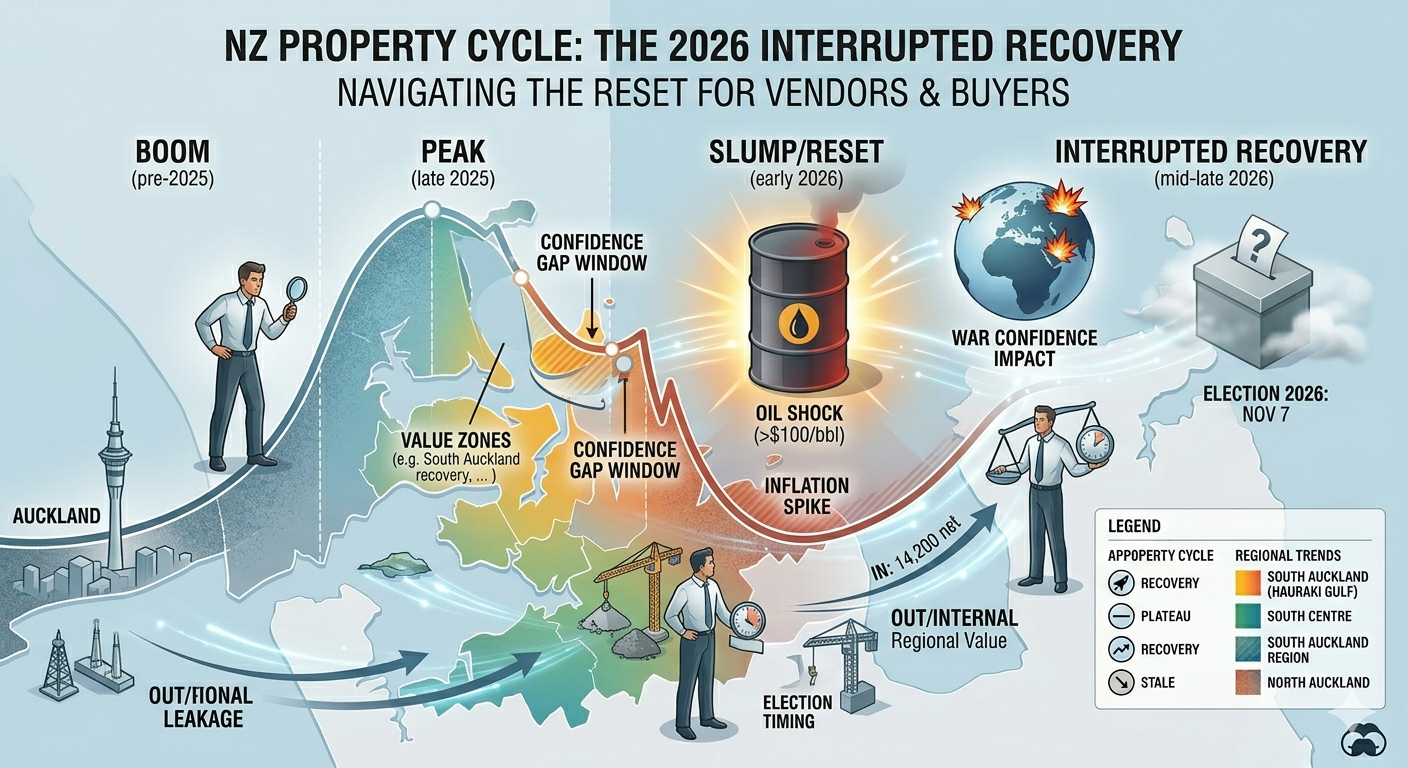
In the dynamic and often volatile landscape of 2026, the New Zealand property market is navigating a complex "reset" phase. For both vendors and buyers, understanding the property cycle is no longer just about tracking historical median prices; it is about decoding a web of global oil shocks, shifting migration patterns, rising building costs, and the looming uncertainty of an election year. This...
Residential
The ongoing geopolitical tensions and conflicts in the Middle East have far-reaching consequences that extend beyond regional borders, influencing global economies and, by extension, specific national markets such as New Zealand's real estate sector. This article explores the multifaceted impacts of these conflicts, particularly focusing on how they contribute to fluctuations in interest rates, fuel...
(This article was written by Manus.im) The New Zealand residential real estate market in 2026 is characterized by a "cautious recovery" following several years of stagnation and volatility. While the national outlook suggests modest price growth of approximately 2-5%, the market is underpinned by significant policy shifts, including the full restoration of interest deductibility and eased lending...
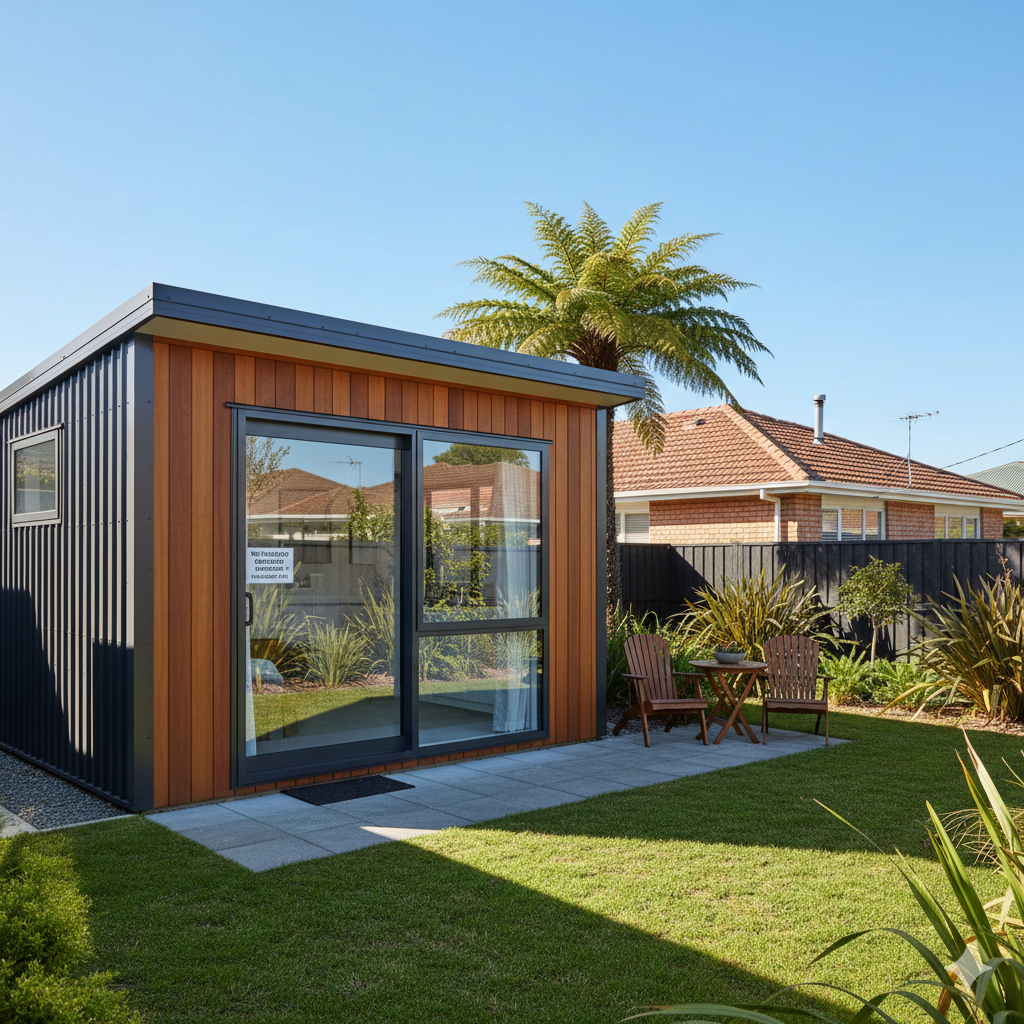
New Zealand homeowners are set to benefit from a significant change in building regulations, making it easier and more affordable to construct small additional dwellings, often referred to as "granny flats" or "accessory dwelling units" (ADUs), on their properties. The new rule, which came into effect recently, allows for the construction of standalone structures up to 60 square meters without requiring a...
Auckland, NZ – - If you are planning a build or renovation in New Zealand, the landscape has just shifted dramatically. In a major announcement today, Building and Construction Minister Chris Penk confirmed the final piece of the government's sweeping building reforms: mandatory home warranties and tougher penalties for shoddy workmanship. This announcement caps off a year of...
Auckland, NZ – New Zealand's approach to urban development and housing intensification is evolving, particularly within its major urban centres. At the forefront of this evolution are the Medium Density Residential Standards (MDRS), a government initiative designed to increase housing supply. However, in Auckland, the application of these rules is undergoing a significant reassessment, driven by a new...
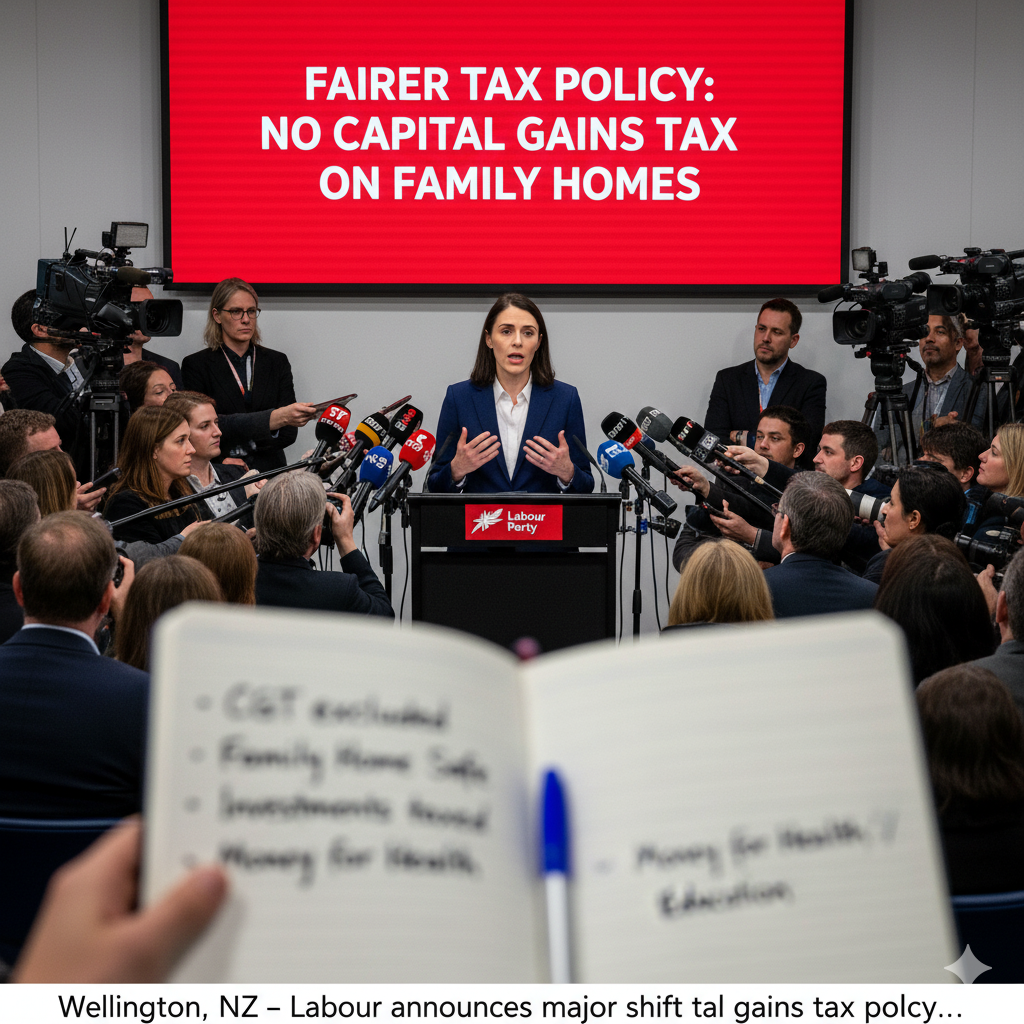
Wellington, NZ – The New Zealand Labour Party has once again brought the contentious issue of a capital gains tax (CGT) to the forefront of national discourse, announcing a significantly refined policy that aims to address wealth inequality and housing affordability without impacting the cherished family home. This detailed report explores the nuances of Labour's proposed CGT, its economic and...
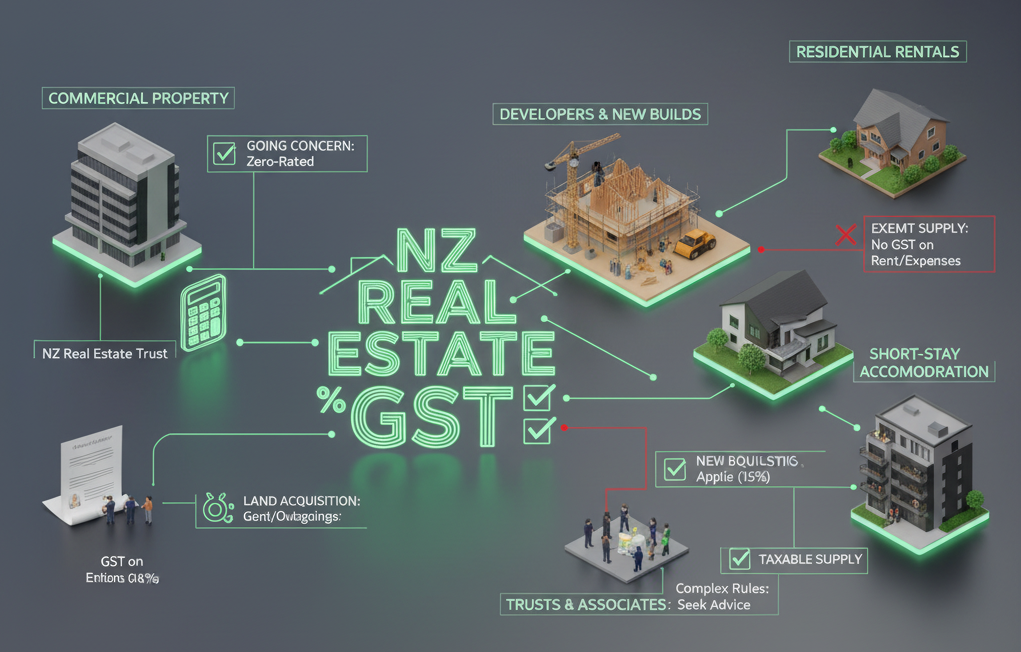
Goods and Services Tax (GST) in New Zealand is a broad-based consumption tax applied to most goods and services, currently at a rate of 15%. While seemingly straightforward, its application to real estate transactions in New Zealand can be complex, impacting everyone from individual homeowners to large-scale developers and commercial investors. This article delves into the nuances of GST in various real...
WELLINGTON, 1 September 2025 — The Government has unveiled changes to New Zealand’s Active Investor Plus(AIP) programme, offering wealthy migrants new opportunities to purchase residential property and invest in housing development. The update allows overseas investors who hold or obtain an investor residence visa to buy or build one home worth at least NZ$5 million, a move aimed at...
Foreign Buyers of NZ Property: What’s Allowed Today New Zealand law strongly limits overseas buyers of property. In general, foreign persons cannot buy existing homes or rural land unless they first get permission from the government. The Overseas Investment Act (OIA) requires most overseas property purchases to be approved by the Overseas Investment Office (OIO) in Land Information NZ. Under the...