

 by
by 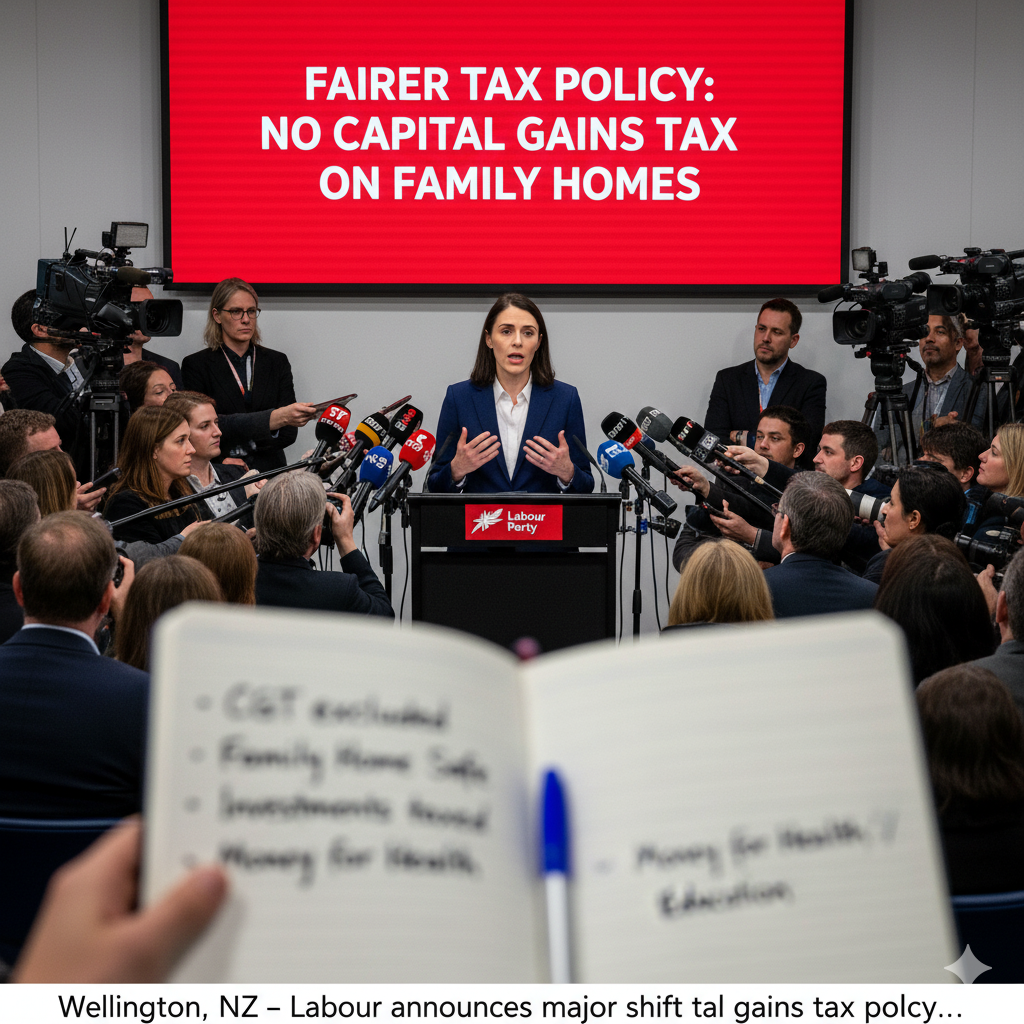
Wellington, NZ – The New Zealand Labour Party has once again brought the contentious issue of a capital gains tax (CGT) to the forefront of national discourse, announcing a significantly refined policy that aims to address wealth inequality and housing affordability without impacting the cherished family home. This detailed report explores the nuances of Labour’s proposed CGT, its economic and social implications, and, crucially, how the anticipated revenue might be allocated to benefit the nation.
The Evolution of Labour’s CGT Stance: A Strategic Refinement
Labour’s journey with a capital gains tax has been marked by political challenges and public apprehension. Previous attempts to introduce a broad CGT have faced significant headwinds, primarily due to fears about its impact on homeowners and the perceived complexity of implementation. This latest iteration represents a strategic refinement, clearly designed to mitigate past criticisms and garner broader public support.
The core principle remains the same: a belief that the current tax system disproportionately favors those with significant capital assets, allowing them to accumulate wealth with lower effective tax rates compared to wage and salary earners. However, the path to achieving this perceived fairness has shifted, with a pronounced emphasis on targeted application and clear exemptions.
Dissecting the Proposed Policy: Key Pillars and Intended Scope
While the full legislative framework is still under development, Labour’s recent communications have provided substantial insight into the policy’s key pillars:
- Unequivocal Exclusion of the Family Home: This is the cornerstone of the updated policy. Labour has committed to ensuring that the primary residence of New Zealanders will not be subject to a capital gains tax. This blanket exemption is a direct response to past public backlash and aims to reassure the vast majority of homeowners that their principal asset and retirement security will remain untouched. This differs from some international CGT regimes that include primary residences above certain value thresholds or after a specific period of ownership.
- Targeting Investment Properties: The primary focus of the CGT will be on investment properties, including residential rentals and commercial real estate, that are not the owner’s primary residence. The intent here is twofold: to discourage speculative investment that drives up property prices and to ensure that profits from such investments contribute to the public purse. The policy would likely apply to gains realized from the sale of these properties, with potential allowances for costs incurred during ownership.
- Scope Beyond Property: While property is a major focus, the CGT is expected to extend to other significant capital assets. This would likely include:
- Shares and Financial Instruments: Gains from the sale of company shares (outside of specific exemptions for small shareholdings or particular investment vehicles).
- Business Assets: Profits derived from the sale of businesses or significant business assets, potentially with provisions for small businesses or those undergoing generational transfer.
- Other Valuables: Depending on the final design, it could also encompass high-value collectibles, art, or other significant assets held for investment purposes. Specific thresholds and exemptions would be critical here to avoid taxing minor gains.
- No Retrospective Application: It is widely expected that the CGT would only apply to gains accrued from the date of implementation, not retrospectively to existing assets. This is crucial for fairness and to avoid disrupting established financial planning. Assets acquired before the implementation date would likely have their “cost base” reset to their value at that date.
- Addressing Loopholes and Anti-Avoidance: Any comprehensive CGT would need robust anti-avoidance provisions to prevent individuals and entities from structuring their affairs solely to evade the tax. This could involve rules around trusts, related party transactions, and complex ownership structures.
The Underlying Rationale: Fairness, Stability, and Progress
Labour’s arguments for a CGT are multifaceted, rooted in principles of economic equity and stability:
- Tax System Fairness and Progressivity: The fundamental argument is that New Zealand’s tax system currently lacks balance. Income derived from labor (wages and salaries) is taxed comprehensively, while significant wealth accumulated through capital gains often goes untaxed. A CGT aims to rebalance this, ensuring all forms of income contribute fairly. This is seen as a key step towards a more progressive tax system where those with greater capacity contribute more.
- Curbing Property Speculation: The skyrocketing house prices in New Zealand have created a significant social and economic challenge. Labour believes that untaxed capital gains on investment properties incentivize speculation, locking out first-time buyers and exacerbating the housing crisis. A CGT is envisioned as a disincentive to “buy low, sell high” purely for quick, untaxed profits.
- Redirecting Investment: By making speculative property investment less attractive, Labour hopes to redirect capital towards more productive investments in the real economy, such as new businesses, research and development, and infrastructure, which can generate jobs and long-term economic growth.
- Reducing Wealth Inequality: New Zealand, like many developed nations, has seen a widening gap between the wealthiest and the rest. Untaxed capital gains contribute significantly to this. A CGT is proposed as a mechanism to help slow the growth of extreme wealth disparities.
- Aligning with International Best Practice: Many OECD countries have comprehensive capital gains taxes. Labour often points to this international precedent, arguing that New Zealand is an outlier and that a CGT is a standard component of a modern, balanced tax system.
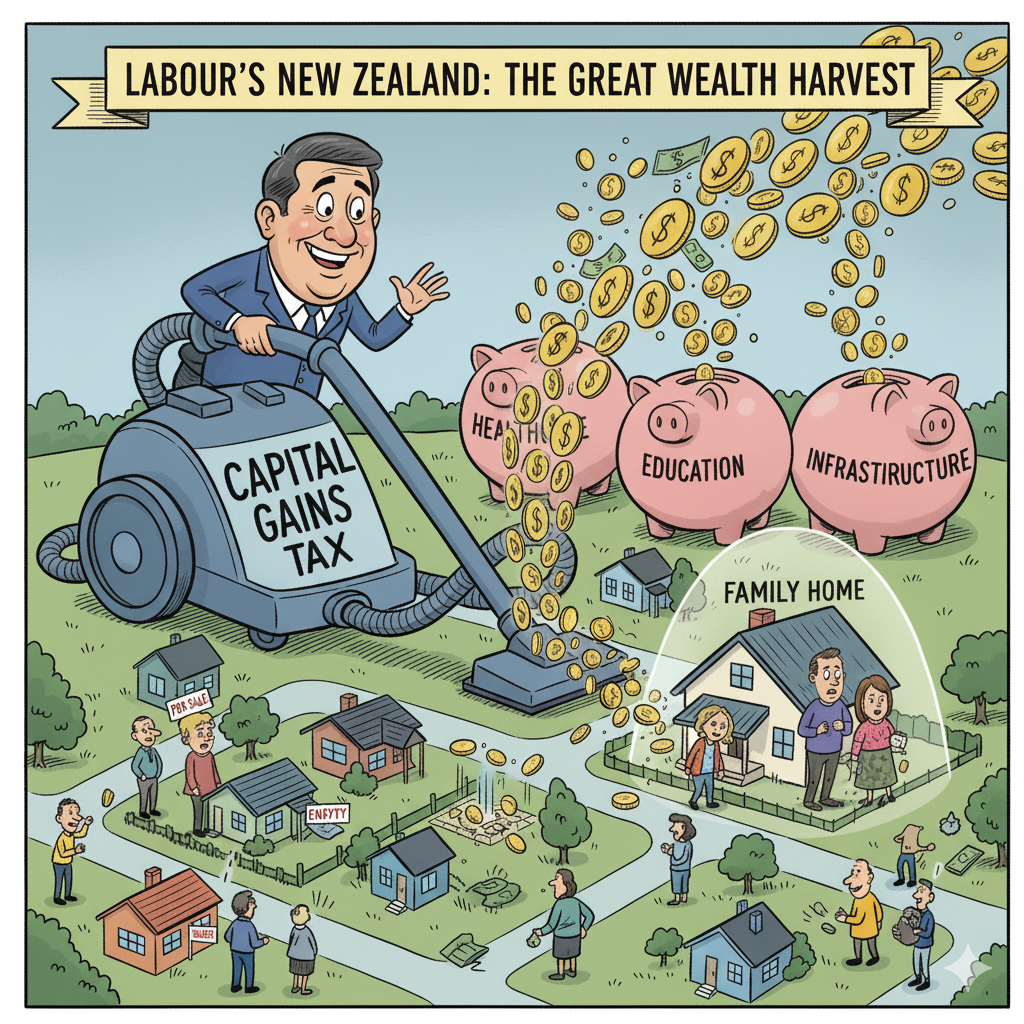
Where Will the Money Go? Allocation of CGT Revenue
This is a critical question for many New Zealanders, and Labour has indicated several potential areas for the deployment of revenue generated by a CGT:
- Investment in Essential Public Services:
- Healthcare: Significant ongoing funding pressures exist within the health sector. CGT revenue could be directed towards reducing wait times, improving access to primary care, funding new medical technologies, and bolstering the health workforce.
- Education: Increased funding for schools, tertiary education, and early childhood care to enhance educational outcomes, reduce class sizes, or improve facilities.
- Social Housing: A portion of the revenue could be ring-fenced to accelerate the construction of social and affordable housing, directly addressing the housing crisis from the supply side.
- Infrastructure Development:
- Transport Networks: Investing in roads, public transport systems (buses, trains, cycling infrastructure) to improve connectivity, reduce congestion, and support economic activity.
- Digital Infrastructure: Expanding broadband access, especially in rural areas, to support a modern digital economy and equitable access to online services.
- Resilience Infrastructure: Funding projects that enhance New Zealand’s resilience to climate change and natural disasters, such as flood defenses and coastal protection.
- Targeted Tax Reductions or Investments:
- Income Tax Threshold Adjustments: The revenue could potentially be used to raise income tax thresholds for lower and middle-income earners, effectively providing a tax cut and increasing disposable income for a broad segment of the population.
- Debt Reduction: A portion could be used to reduce government debt, improving the nation’s fiscal position and creating more headroom for future spending or economic shocks.
- Productivity-Enhancing Investments: Funding for research and development, innovation hubs, or initiatives that support export-oriented industries to boost long-term economic productivity.
- Environmental Initiatives:
- Climate Change Mitigation: Investing in renewable energy projects, emissions reduction technologies, and initiatives to support a just transition to a low-carbon economy.
- Conservation: Funding for biodiversity protection, restoration of natural habitats, and pest control efforts.
Labour’s strategy would likely be to articulate specific “spending pledges” linked to CGT revenue, demonstrating clear public benefit and creating a compelling case for the policy.
Reactions and the Road Ahead: A Thorny Path
The renewed CGT discussion has, as expected, sparked intense debate:
- Opposition Parties (National, ACT): Remain staunchly opposed, labeling it a “death tax” or a “tax on success.” Their arguments center on potential negative impacts on investment, economic growth, the complexity of implementation, and the risk of capital flight. They often highlight the administrative burden and the potential for unintended consequences.
- Property Investor Groups: Express significant concerns, predicting a possible reduction in the rental housing supply as investors exit the market, leading to increased rents and further pressure on tenants.
- Business Community: Awaits finer details, particularly concerning the treatment of business assets and shares. Concerns revolve around potential disincentives for entrepreneurship and investment, especially for small to medium-sized enterprises (SMEs).
- Economists: Offer diverse perspectives. Some support the policy for improving tax efficiency and equity, while others caution about implementation challenges, potential economic distortions, and the need for careful calibration.
- Social Justice Advocates: Largely welcome the policy as a crucial step towards addressing wealth inequality and making the tax system fairer. They often emphasize the moral imperative for those who benefit from capital gains to contribute more to society.
- Homeowners (Non-Investors): The explicit exclusion of the family home has largely mitigated their direct opposition, but some remain wary of broader economic impacts or future expansions of the tax.
The path to implementation for Labour’s CGT policy will be fraught with challenges. The party will need to:
- Communicate Clearly and Consistently: Provide detailed information to counter misinformation and build public understanding.
- Consult Extensively: Engage with stakeholders, tax experts, and the public to refine the policy and address concerns.
- Design a Robust System: Develop clear, unambiguous legislation with effective anti-avoidance measures and reasonable administrative burdens.
- Demonstrate Benefits: Clearly articulate how the revenue will be used to improve the lives of New Zealanders and deliver tangible benefits.
The debate over a capital gains tax is more than just a fiscal policy discussion; it’s a reflection of New Zealand’s values and its vision for economic fairness and future prosperity. Labour’s latest announcement marks a significant moment in this ongoing national conversation.
Disclaimer:
The information provided in this article is general in nature and should not be considered as legal, financial, or professional advice. Buyers/sellers are strongly encouraged to seek independent legal and/or financial advice from qualified professionals before making any decisions related to property transactions.


Join The Discussion