

 by
by 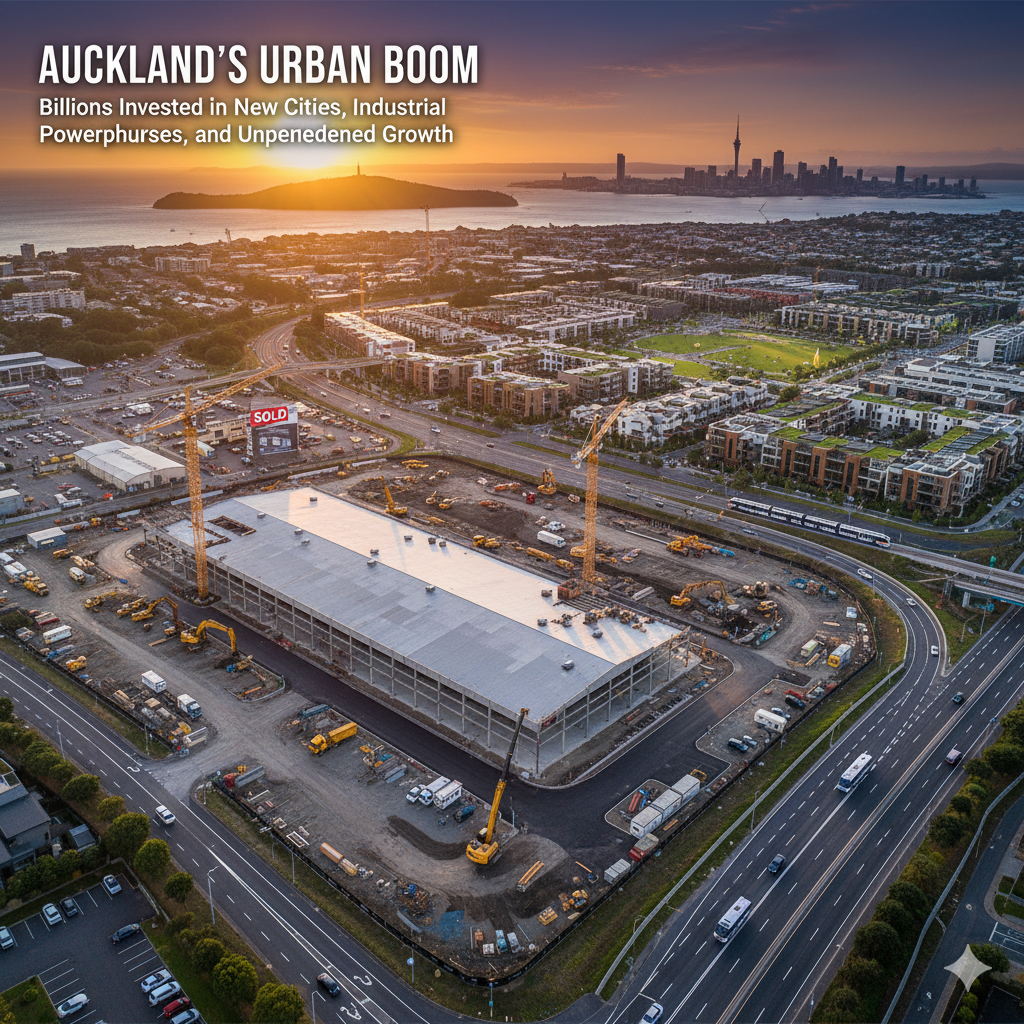
Auckland, NZ – [Nov 2025] – Auckland is currently experiencing its most intensive and largest-scale construction boom in a decade, with tens of billions of dollars being poured into transformative projects across the region. From the nascent coastal city of Beachlands South to the industrial core of Wiri, and extending to growth hubs like Westgate, East Tāmaki, and Drury, the city’s landscape and economic structure are undergoing a profound reshaping. This government and private sector-backed push aims to address critical housing shortages, enhance infrastructure, and create dynamic, future-proofed communities for its rapidly expanding population.
The sheer scale of investment is staggering, drawing from the Housing Acceleration Fund (HAF), direct government appropriations, and significant private capital, signalling a determined effort to build a more resilient and equitable Auckland.
Beachlands South: A New Coastal City Emerges from the “Bleaklands”
The “Bleaklands” of yesteryear are giving way to Beachlands South, a multi-billion dollar master-planned coastal city development. The official groundbreaking ceremony on November 13th marked the commencement of this multi-stage, long-term super development, years in the making. Spanning a massive 307 hectares, it stands as one of Auckland’s largest greenfield developments in recent memory.
Key Players & What’s Underway:
- The ceremony was attended by Prime Minister Christopher Luxon, Auckland Mayor Wayne Brown, Russell Group Managing Director Brett Russell, NZ Super Fund executive Will Goodwin, and representatives from Ngāti Tai ki Tāmaki, collectively signalling the project’s national significance.
- The project is driven by Beachlands South Limited Partnership, a consortium including the Russell Group, NZ Super Fund, and Ngāi Tai Hapai (the investment arm of Ngāti Tai ki Tāmaki).
- Initial earthworks permits have been secured for the first 37 hectares, with site preparation now actively commencing. All appeals against the development were withdrawn by the end of last year, clearing significant planning hurdles.
The Vision & Financial Scope:
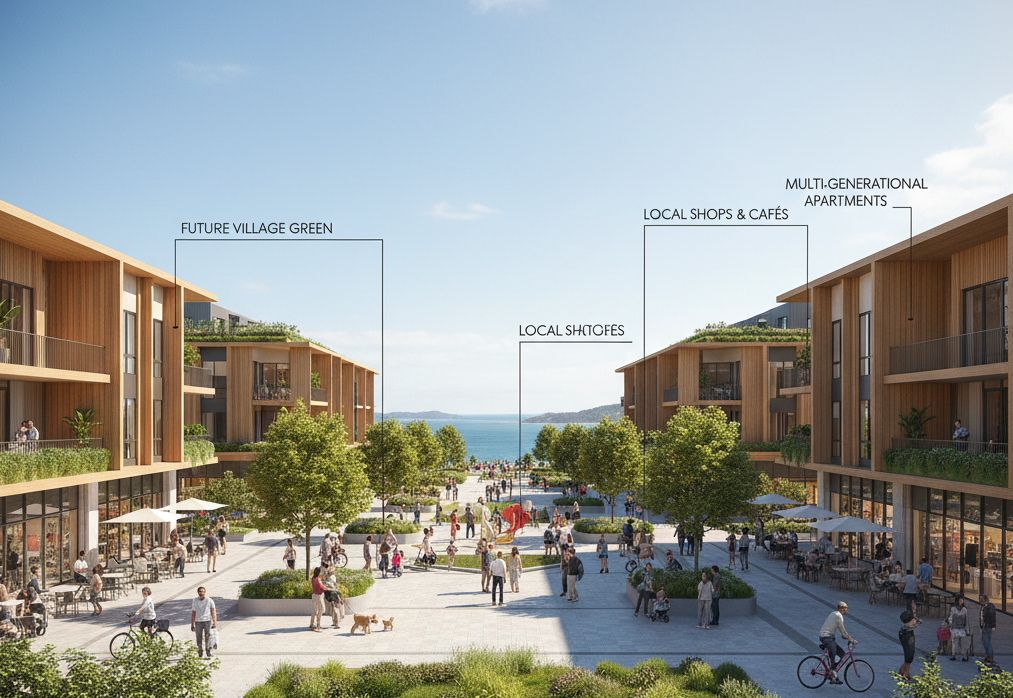
- New Town Blueprint: The first phase of 37 hectares will see the construction of one primary school, one secondary school, and a Village Centre comprising retail, services, and a community plaza.
- 5,000 New Homes: While negotiations with the Ministry of Education for school sites are ongoing, developers have confirmed the overall scale will support a new urban community of approximately 5,000 new residential dwellings, designed for multi-generational living.
- Formosa Golf Course Transformation: A significant portion of the development involves the complete transformation of the 170.5-hectare former Formosa Golf Course. This land will become extensive parklands, multi-level residential areas, walking and cycling networks, and smaller commercial centres with public facilities.
- International Design: An international team of planners and architects, including Jasmax (Auckland), Woods Bagot (Melbourne), Studio Pacific (Wellington), and Studio Woodroffe Papa (London), are involved, underscoring the high standards of this urban renewal project.
- 10-15 Year Construction: Russell Group expects the next two years to be dominated by land shaping, with vertical construction beginning in approximately two years. The entire development is projected to take 10 to 15 years to complete, positioning Beachlands South as one of Auckland’s fastest-growing coastal communities.
Outlook: This project marks a transformative shift for Auckland’s southeastern coast, establishing a self-sufficient new town with significant housing capacity and a strong community focus. The long-term outlook is for a vibrant, well-planned coastal hub that significantly eases Auckland’s housing pressure.
Wiri: A $1 Billion Logistics Giant Taking Shape
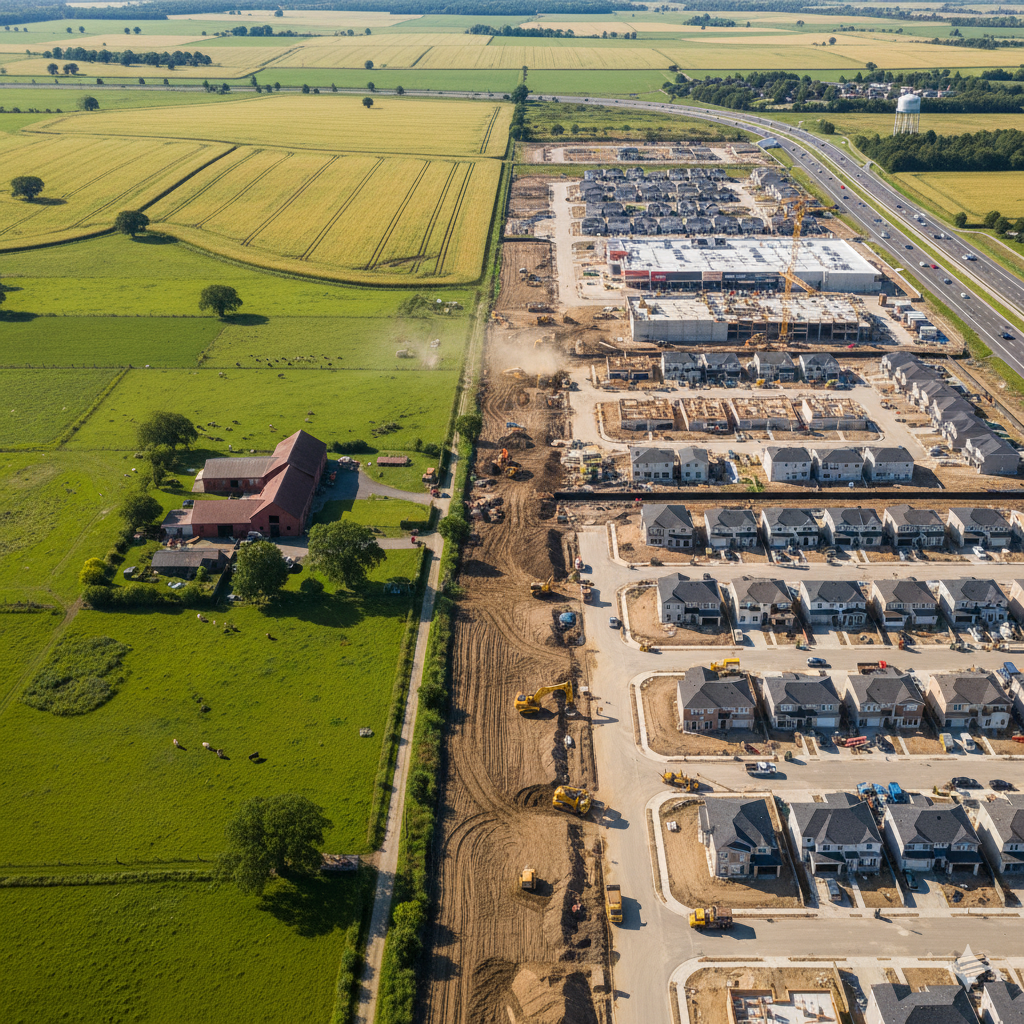
In stark contrast to Beachlands’ residential focus, Wiri in South Auckland is rapidly solidifying its position as the city’s largest industrial and logistics hub. The area is becoming a magnet for massive industrial development, underpinned by substantial private investment and strategic geographical advantages.
Key Players & What’s Underway:
- James Kirkpatrick Group is constructing Auckland’s largest single new building – a 65,000 sqm logistics and warehousing centre – on a 65-hectare site at 352–358 Puhinui Rd.
- This colossal facility, built by Macrennie Construction, is the core component of an even larger $1 billion logistics park.
- Over $200 million has already been invested in foundational infrastructure, roads, ground stabilisation, and services installation.
- The project, conceived in 2008 when the land was a strawberry farm, only became viable after Private Plan Change 35 rezoned the rural land for industrial development.
What’s Planned & Financial Commitment:
- Massive Warehousing: The park will feature multiple major warehousing buildings, including: C1 (21,000㎡), C2a (6,810㎡), C2b (7,300㎡), C3 (7,900㎡), C4 (10,000㎡), and C5 (8,400㎡).
- Long-Term Holdings: All buildings will operate under long-term leases, not for sale, indicating the developer’s intent to establish a large-scale, enduring industrial cluster.
- Southern Employment Corridor: Wiri’s strategic location, adjacent to SH20, SH1, and SH16 motorways, the southern rail freight corridor, Auckland Airport, and the Southdown–Wiri logistics corridor, makes it an ideal distribution centre.
Outlook: Over the next decade, Wiri is set to become Auckland’s largest employment hub in the south, projected to create thousands of new jobsin logistics, operations, management, and supply chain. It will be a more sophisticated, well-connected, and future-proofed employment and logistics centre, underpinning Auckland’s economic growth.
Auckland’s Wider Development Pipeline: 42 Projects Reshaping the City
A recent CBRE report, “Auckland Development Pipeline,” by Zoltan Moricz and Roger Du, highlights that Auckland currently has 42 major projects either under construction or nearing groundbreaking – representing the most active construction period in a decade.
Industrial Development Dominates:
- 27 industrial projects are leading the charge, compared to 8 office and 7 retail developments.
- Southern and Southeastern industrial corridors are booming:
- ESR (Wiri): A 29,000㎡ development.
- Fisher & Paykel Healthcare (East Tāmaki): A new 40,000㎡ campus.
- Wilson Group (East Tāmaki): Self-use headquarters.
- Briscoes Group (Drury): Self-built logistics centre.
- Calder Stewart: Constructing multiple distribution warehouses for NZ Safety Blackwoods and Langdons.
- Goodman: Major logistics expansion at Waitomokia (formerly a vineyard).
- Argosy Property: Mt Richmond light industrial park at the foot of Ōtāhuhu.
- These projects are collectively expected to add approximately 400,000㎡ of new business and warehousing space in the coming years, marking the most intensive industrial property expansion in Auckland’s history.
Office Market: Cautious but Active:
- 8 office projects are underway in the CBD and suburbs.
- 2–14 Wakefield St (PAG): Due for completion this year.
- 35 Graham St (Mansons TCLM): Under demolition, with 20,000㎡ of office space expected by 2028.
- Other projects are awaiting higher pre-lease commitments, reflecting current market caution, but a steady demand for quality office space persists.
Retail Expansion: Westgate and IKEA Lead the Way:
- 7 retail projects are highly concentrated.
- Westgate: Adding 5 new buildings, including a new Kmart.
- IKEA: New Zealand’s first store opened on December 4th.
- Whenuapai town centre: Gaining new street-level retail.
- Multiple supermarket upgrades across the city, including New World Te Atatū, New World Victoria Park, and Woolworths Onehunga, enhancing services in northwest and southeast growth areas.
The Outlook and Remaining Questions
From new coastal cities to industrial corridors, from 5,000-home communities to multi-billion dollar logistics hubs, Auckland is at a rare urban expansion tipping point. The simultaneous development across residential, employment, transport, and commercial sectors is quietly reshaping future lifestyles.
However, alongside this unprecedented construction wave, critical questions remain:
- Will these new towns receive adequate school and public transport infrastructure in a timely manner?
- How will the expansion of southern industrial zones alter the employment landscape and impact commuting patterns?
- What long-term effects will the rapid growth in retail and industrial projects have on property prices, rents, and regional balance across Auckland?
The answers to these questions will profoundly affect every resident of this evolving city. The success of these ambitious plans hinges on sustained political will, robust collaboration among government agencies and the private sector, and effective engagement with communities and Mana Whenua to shape an Auckland that benefits all.
Disclaimer:
The information provided in this article is general in nature and should not be considered as legal, financial, or professional advice. Buyers/sellers are strongly encouraged to seek independent legal and/or financial advice from qualified professionals before making any decisions related to property transactions.

Join The Discussion