

 by
by 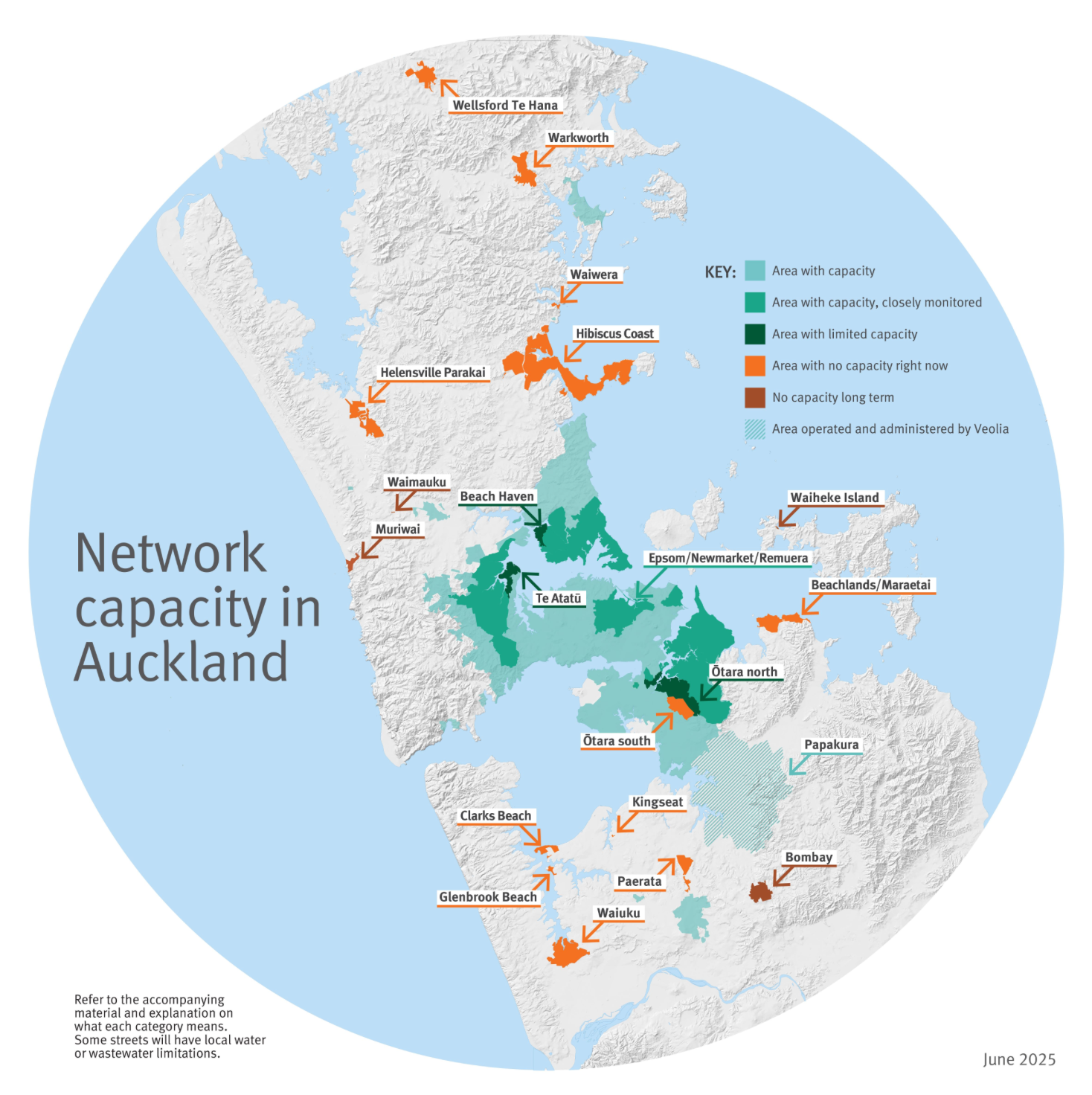
Auckland, NZ – June 12, 2025 – For property developers and urban planners in Auckland, understanding the nuances of Watercare’s network capacity is paramount to successful project delivery and strategic land acquisition. This guide delves into the current state of Auckland’s water and wastewater infrastructure, highlighting critical capacity constraints, planned upgrades, and the long-term vision shaping the region’s development landscape.
Navigating Current Network Constraints: A Developer’s
Perspective
Watercare’s recently updated network capacity maps (June 2025) serve as an indispensable resource, delineating areas with existing infrastructure capacity and those facing limitations. These maps are not merely informational; they are a direct indicator of where development can proceed efficiently and where significant infrastructure investment or strategic planning is required.
Key Areas of Constraint:
Developers should pay close attention to regions identified with limited capacity or no capacity right now. These limitations primarily stem from:
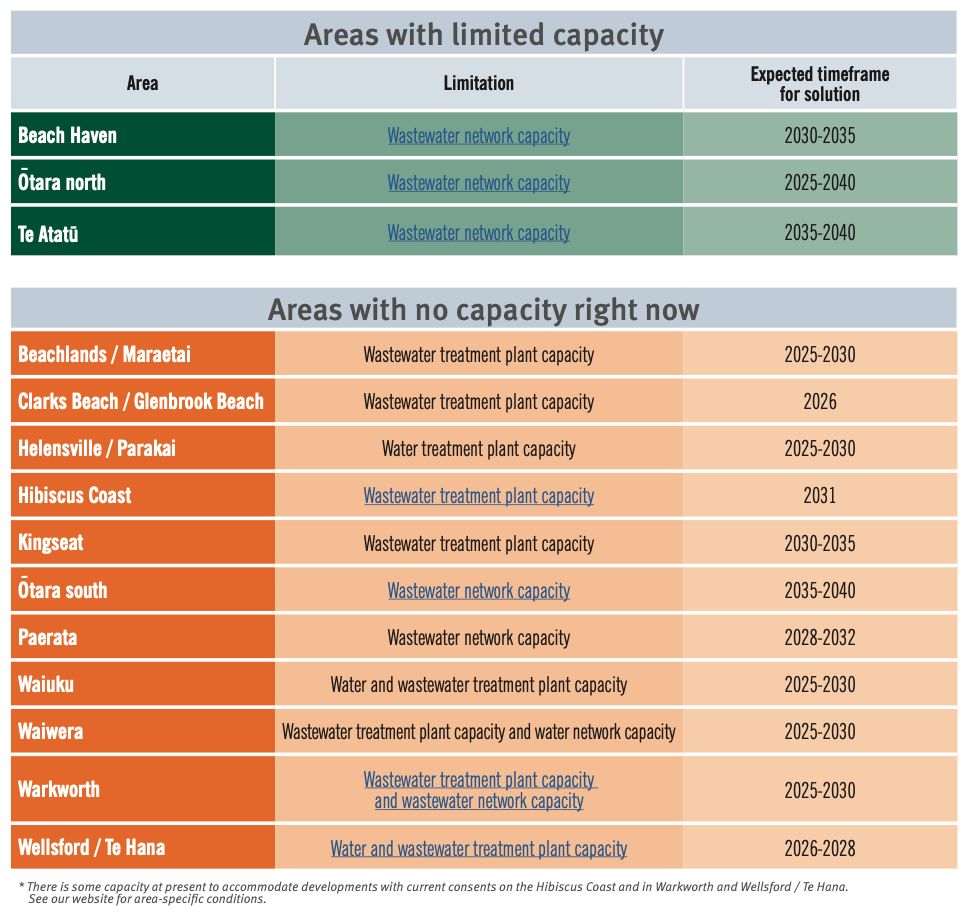
- Wastewater Network Capacity: Several key development zones, including Beach Haven, Ōtara North, and Te Atatū, are currently experiencing wastewater network constraints. The projected resolution timeframes for these areas range from 2025 to 2040, indicating that immediate large-scale wastewater-intensive developments may face significant delays or require bespoke solutions.
- Treatment Plant Capacity: A broader array of locations faces challenges related to the capacity of both water and wastewater treatment plants. These include Beachlands/Maraetai, Clarks Beach/Glenbrook Beach, Hibiscus Coast, Kingseat, Paerata, Waiuku, and Waiwera, with expected upgrade completion dates spanning from 2025 to 2035. Developers in these areas must factor in these timelines and potential connection limitations when assessing project viability.
It is also crucial to note that certain rural areas retain historic constraints inherited by Watercare in 2010. For these smaller communities, there are currently no plans for significant network capacity increases, which may limit development potential in the long term.
Strategic Infrastructure Investment: Unlocking Future
Development
Watercare’s proactive investment strategy is directly tied to Auckland’s projected population growth of 13% over the next decade, equating to an additional 215,000 residents. This necessitates a robust and forward-thinking approach to infrastructure development.
Investment Highlights:
- FY25 Capital Expenditure: Over $1 billion is earmarked for new and upgraded water and wastewater infrastructure in the current financial year.
- Decadal Investment: A substantial $13.8 billion investment is planned over the next ten years, with approximately half of this capital specifically allocated to growth-enabling projects. This significant commitment underscores Watercare’s dedication to facilitating Auckland’s expansion.
This investment is strategically aligned with the Auckland Council’s Future Development Strategy, ensuring that infrastructure upgrades are synchronized with urban growth areas. This integrated planning approach aims to minimize development bottlenecks and maximize the efficiency of new land releases.
Current and Upcoming Projects: Opportunities for Developers
Understanding ongoing and planned projects is vital for developers to identify immediate and future opportunities. Key initiatives include:
- Wellsford Wastewater Upgrade: A $38.3 million upgrade of the Wellsford Wastewater Treatment Plant is well underway, with essential infrastructure nearing completion. This project is vital for improving wastewater services in the area.
- Watermain Repairs Under Auckland Harbour Bridge: The first stage of critical watermain repairs under the Auckland Harbour Bridge has been successfully completed, addressing vital infrastructure for the city’s water supply.
- Wastewater Upgrades in Beachlands and Maraetai: As part of a $12 million renewals program, wastewater network upgrades are in progress in Beachlands and Maraetai, aiming to enhance Auckland’s overall wastewater infrastructure.
- Pukekohe Water Network Upgrades: A $2 million project to increase the capacity of the water network in Pukekohe and Buckland has been completed, supporting future growth in these areas.
- Southwest Wastewater Scheme: Tunnelling for a new harbour outfall at Clarks Beach has commenced as part of the transformational southwest wastewater servicing scheme. This initiative is expected to significantly improve the water quality of the Manukau Harbour.
- New $115 Million Watermain: A major project involving a new $115 million watermain, designed to carry water to west and central Auckland, was completed 20% under budget after a six-year construction effort.
Metropolitan Servicing Strategy: A 70-Year Vision
Central to Watercare’s long-term planning is the Metropolitan Servicing Strategy, a comprehensive 70-year plan spanning from Whangaparāoa in the north to Pukekohe in the south. This strategy aims to ensure the continued delivery of safe, reliable, and affordable water services for all Aucklanders, addressing challenges posed by climate change, aging infrastructure, and increasing demand. The development of this strategy involves active community engagement, with public feedback being a crucial component in shaping the future of water and wastewater services in the region.
This strategy emphasizes collaborative development, with ongoing community engagement shaping its implementation. Developers are encouraged to participate in these consultations to ensure their needs and insights are incorporated into Auckland’s long-term water and wastewater planning.
Auckland’s dynamic growth presents both challenges and immense opportunities for developers. Watercare’s transparent communication regarding network capacity, coupled with its substantial investment in infrastructure upgrades and long-term strategic planning, provides a clear roadmap for navigating the complexities of urban development. By understanding these critical infrastructure details, developers can make informed decisions, mitigate risks, and contribute to the sustainable growth of Auckland.
Source: https://www.watercare.co.nz/builders-and-developers/consultation/network-capacity-in-auckland

Join The Discussion